A harvest month printed in a catalogue usually describes a place, a cultivar and a familiar pattern of weather. Move the tree, change the season or alter the planting material, and that pattern may shift. Even within one orchard, trees can differ in flowering and maturity. Treat calendar dates as prompts to look closely, not instructions to act regardless of conditions.
Keep a simple record of rainfall, irrigation, new shoots, flowering, fruit set and harvest. Add unusual heat, wind or flooding. Photographs taken from the same position help make gradual changes visible. Over time, this record becomes more useful than a generic tropical care chart because it describes the trees and conditions you actually manage.
Establishment: build a functioning root zone
Newly planted trees have limited access to surrounding soil moisture. Inspect both the original root ball and the adjacent soil: they can hold water differently. Water according to observed moisture and weather rather than applying the same amount every day. Persistent wilting does not always mean drought; damaged or oxygen-starved roots can also fail to supply water.
Maintain appropriate protection from wind and harsh exposure, but inspect ties and guards so they do not damage the stem. Remove competing weeds carefully without injuring young roots. Heavy feeding cannot compensate for poor establishment. If a young tree flowers heavily, seek species-specific advice about reducing the crop while the framework develops.
Vegetative growth: watch the kind of growth you are encouraging
New shoots are useful observations, not automatic proof that all conditions are ideal. Repeated soft growth may be vulnerable to pests, wind or unsuitable seasonal timing. Before adding fertiliser, consider whether the tree needs more growth and whether its current root environment can support it. Use local soil or leaf testing where appropriate rather than diagnosing every pale leaf as a single nutrient shortage.
Pruning also needs context. Removing a branch changes light distribution and can trigger new growth. The best timing depends on species, crop cycle, rainfall and disease conditions. Clean tools, make deliberate cuts and avoid severe interventions simply because a calendar says it is pruning season. If a tree has become structurally unsafe, obtain competent help.
Flowering and fruit set: observe before intervening
Record when flowers appear, how the weather behaves and whether visiting insects are active. Poor set can result from several interacting causes, including unsuitable conditions, pollination limitations and tree stress. A photograph of dropped fruit is rarely enough to establish the cause. Compare the pattern across branches and neighbouring trees, and note whether loss occurs immediately after flowering or later.
Some early fruit drop is part of normal crop adjustment. Sudden severe loss, unusual lesions or branch decline deserve closer investigation. Avoid applying pesticides merely because flowers attract insects: visitors may be pollinators or harmless organisms. Any treatment must follow local law, the product label, crop approval and relevant precautions, including harvest intervals.
Fruit development: support consistency, not extremes
Check soil moisture through the developing root zone and inspect irrigation for blocked or misplaced outlets. Alternating severe dryness and excess water can stress trees and affect fruit quality, although the response varies by species. Mulch can help moderate surface conditions, but it does not replace observation. Watch for branches bending under a heavy crop and plan safe management before breakage occurs.
Keep fruit and fallen debris under observation for pests and disease. Sanitation methods depend on the problem: some damaged fruit should not go into an unmanaged compost pile. Ask local plant-health services about suspected regulated pests and do not move affected material between properties. Useful monitoring is specific enough to guide a response, not just a list of things that might go wrong.
Harvest: separate maturity from eating ripeness
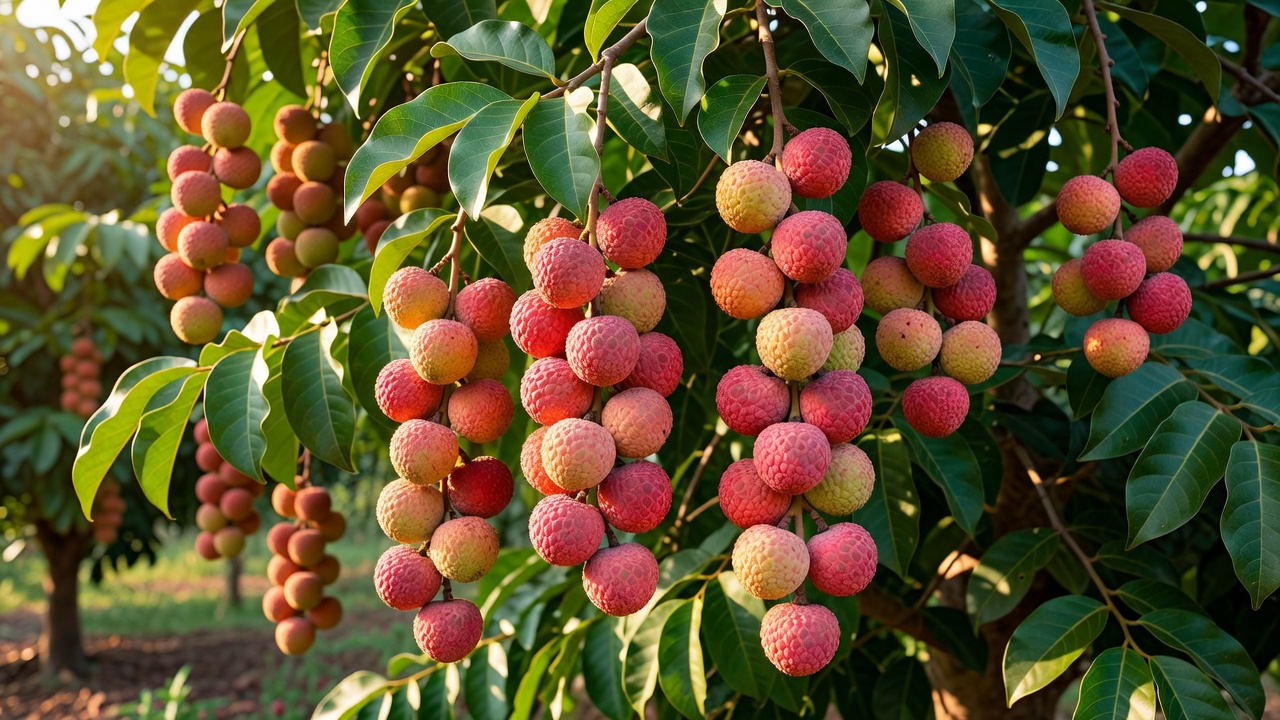
Mango can continue ripening after harvest when picked at suitable physiological maturity. Lychee and rambutan do not develop equivalent eating quality from immature picking. This distinction is more useful than a universal instruction to harvest when fruit is soft. For each cultivar, learn a combination of indicators such as development stage, shape, colour change and sample eating quality.
Choose safe picking methods, avoid dropping fruit and keep harvested produce shaded. Use clean containers and handle damaged fruit separately. Do not eat unidentified fruit or assume all seeds and fruit parts are edible. Storage temperature and shelf life vary widely among tropical species; colder is not automatically better because some fruit suffers chilling injury.
After harvest: review the whole cycle
Record yield in a way that is realistic for your scale, including damaged or unusable fruit. Note flavour, harvest effort and losses rather than total weight alone. Review whether canopy crowding, irrigation gaps or inaccessible branches caused repeated problems. Post-harvest care should help the tree recover according to its growth pattern, not trigger indiscriminate pruning and feeding.
A useful seasonal plan ends with a question: what observation would make next year’s decision clearer? Add that observation to your routine. Consistent records cannot remove weather uncertainty, but they can help you respond with fewer assumptions and more confidence.